




Prop 65 Is a Shakedown: The Truth About Heavy Metals, Soil Science, and Real Produce
Prop 65 Is a Shakedown: The Truth About Heavy Metals, Soil Science, and Real Produce
⚡ Quick Summary (TL;DR)
- Soil naturally contains trace minerals: Real fruits and vegetables absorb micro-trace background elements (lead, cadmium, arsenic) from natural Earth soil during growth.
- Dehydration concentrates dry weight: Freeze-drying removes up to 97% of water weight. This concentrates natural soil minerals per gram, triggering arbitrary warning thresholds without increasing real biological intake.
- Prop 65 limits are non-toxic thresholds: California’s 0.5 mcg lead limit is 1,000 times lower than established scientific safe effect levels, triggering warnings on basic organic fresh produce.
- Synthetic foods avoid warnings: Ultra-processed lab foods and artificial powders carry zero Prop 65 warnings simply because they are manufactured without real agricultural soil.
If you buy food, coffee, or supplements in the state of California—or visit a parking garage, hotel, or coffee shop there—you’ve seen the infamous black-and-yellow warning sign:
"WARNING: This product contains chemicals known to the State of California to cause cancer and birth defects..."
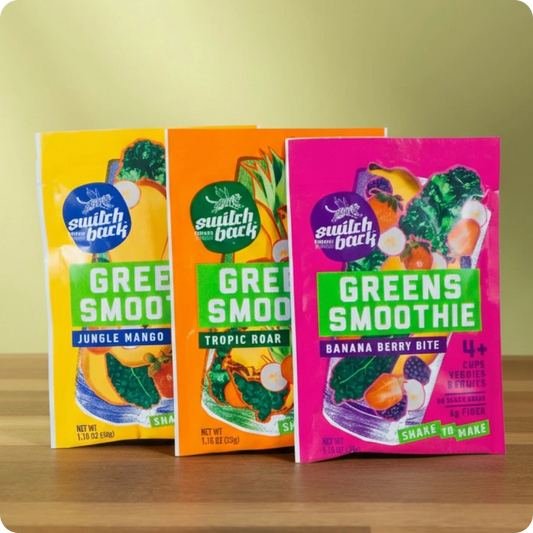
You see it on organic spinach. You see it on bags of whole-bean coffee. You see it on raw cocoa. You see it on high-quality plant produce. And yes, sometimes you see it on products like Switchback.
To the average customer, seeing that label causes instant panic: "Oh my god! Is this dangerous!?"
Let’s be brutally honest: California’s Proposition 65 is an absolute crock of shit.
It is a broken, outdated law that treats a bag of 100% real freeze-dried organic strawberries the exact same way it treats an industrial lead-acid car battery or a can of spray paint. It doesn't protect consumers—it protects parasitic personal-injury lawyers, punishes real farmers, and encourages people to eat synthetic ultra-processed junk.
Here is the real chemistry, soil science, and legal reality behind Prop 65—and why your organic fruits and vegetables aren't trying to poison you.
1. Dirt Contains Minerals (Shocker!)
Before we talk about laws, let's talk about basic 4th-grade geology.
Fruits, vegetables, and leafy greens grow in soil. Earth’s crust naturally contains trace amounts of elements like lead, cadmium, and arsenic. They have been in the dirt for four billion years.
When a strawberry plant or a leaf of kale extends its roots into healthy, organic soil, it draws up water and natural minerals to grow. Because the plant grows in real dirt, it will absorb micro-trace amounts of naturally occurring soil minerals.
If a plant has zero trace heavy metals, it means one of two things:
- It was grown in a sterile, chemical-filled plastic lab liquid (hydroponic factory farming).
- It is a 100% synthetic chemical powder made in a test tube.
Real food grown in real soil carries trace minerals from the Earth. It has been that way since the dawn of human agriculture.
2. The "Water Weight" Concentration Math
So why can you buy a raw head of organic kale at a California grocery store without a Prop 65 label, but the moment you freeze-dry that exact same kale, lawyers jump out of the bushes with a lawsuit?
It comes down to simple water weight math.
Fresh produce is up to 97% water. When you eat a fresh strawberry, you are mostly consuming natural plant water.
At Switchback, we freeze-dry 100% real whole produce. We gently remove the water weight so you get a shelf-stable, 10-second smoothie packet without needing preservatives. When you take away 97% of the water, you are left with a densely concentrated cellular food matrix.
Here is the absurdity: The total amount of trace soil minerals in a packet of Switchback is identical to the fresh produce you buy at the grocery store. But because California's Prop 65 rules measure heavy metals per gram of dry weight rather than total biological impact, concentrating the food automatically triggers California's arbitrary micro-gram threshold on paper!
Standard Comparison: Regulatory Limits vs. Agricultural Realities
| Regulatory Standard | Daily Lead (Pb) Limit | Scientific & Agricultural Context |
|---|---|---|
| California Prop 65 (MADL) | 0.5 micrograms / day | 1,000x lower than observable effect levels; routinely triggered by fresh organic carrots/spinach |
| US FDA Interim Reference Level | 2.2 – 12.5 micrograms / day | Establishes realistic dietary safety thresholds based on total human health impact |
| European Food Safety Authority (EFSA) | Varies by crop dry weight | Recognizes naturally occurring background soil minerals in whole agricultural produce |
3. California's Arbitrary Limits vs. World Safety Standards
How extreme is California’s Prop 65 law?
Prop 65 sets the "Safe Harbor" limit for lead at 0.5 micrograms per day. That number was pulled out of thin air in 1986—and it is literally 1,000 times lower than the level established by scientists to cause any observable health effect!
Let's compare California to actual global health authorities:
- European Food Safety Authority (EFSA): European food standards are notoriously strict. Yet European law recognizes that natural plant produce carries background soil minerals, allowing safety thresholds vastly higher than California’s absurd 0.5 mcg limit.
- World Health Organization (WHO) & US FDA: A single serving of fresh organic carrots, sweet potatoes, or spinach bought at a farmers market easily exceeds California's 0.5 mcg daily Prop 65 limit.
By California’s logic, an organic farmer’s market in Sonoma is a hazardous waste site.
4. The Prop 65 Shakedown Industry
If Prop 65 is scientifically ridiculous, why does it still exist?
Follow the money.
Prop 65 contains a legal loophole called the "bounty hunter provision." It allows private personal-injury lawyers to sue companies without ever having to prove that a single human being was harmed or sickened.
These law firms hire technicians to go around buying organic plant products, send them to labs to detect 0.6 micrograms of naturally occurring soil lead, and then hit small businesses with multi-thousand-dollar lawsuit threats.
It costs a small company $100,000+ in court fees just to prove in court that their lead is naturally occurring from soil. So companies are forced to either pay a $30,000 extortion settlement to the lawyer or slap a ridiculous yellow sticker on their product.
We’ve experienced this legal shakedown firsthand. We’ve watched direct-to-consumer health brands—and even major plant brands like Orgain—get targeted by parasitic legal firms simply because their products are grown in actual soil instead of synthesized in a lab.
No shit plant products contain trace minerals—THEY WERE GROWN IN THE GROUND, YOU DIPSHITS!
5. California Wants You to Eat Processed Junk
Here is the ultimate irony of Prop 65:
If you manufacture a hyper-processed snack cake loaded with refined white flour, high fructose corn syrup, artificial dyes, and industrial seed oils, you get zero Prop 65 warnings. Why? Because fake laboratory chemicals don't come from soil, so they don't carry soil minerals!
But if you freeze-dry 100% real organic kale, blueberries, and dragonfruit grown in rich Earth, California slaps you with a cancer warning.
California’s law explicitly rewards ultra-processed junk food while penalizing real, whole-food produce. Anyone who uses Prop 65 to sue real food companies over natural soil minerals should be legally forced to eat Cheez-Its and Snickers bars for the rest of their lives.
Frequently Asked Questions About California Prop 65 & Produce Safety
Q: Why do organic produce and plant products have California Prop 65 warnings?
A: Organic fruits and dark greens absorb natural background trace minerals (like lead and cadmium) directly from Earth's soil during growth. California Prop 65 sets strict warning thresholds at 0.5 mcg/day—1,000 times lower than scientific safety limits—causing natural produce to trigger warnings easily.
Q: Why does freeze-drying produce trigger Prop 65 warnings when fresh produce doesn't?
A: Fresh produce consists of up to 97% water. Freeze-drying removes the water weight, leaving a concentrated dry powder. While the total amount of soil minerals per serving remains unchanged, Prop 65 measures concentration by dry weight, artificially triggering warning limits on paper.
Q: Are heavy metals in plant products dangerous to consume?
A: Trace minerals found in whole plant foods occur naturally due to soil geology. Global health organizations like the FDA and World Health Organization recognize background soil minerals in whole agricultural foods as normal, safe, and vastly different from industrial chemical contamination.
The Bottom Line: Eat Real Food.
At Switchback, we will never compromise on real food. We refuse to replace 100% real whole produce with synthetic laboratory powders just to satisfy a broken California legal shakedown.
Our products are made from real fruits and dark leafy greens grown in natural soil, freeze-dried at peak harvest, and delivered directly to your door with 4 to 6 grams of intact plant fiber and zero added sugar.
Eat real food. Trust real science. Ignore the legal extortionists.
Give your body the real, un-processed plant nutrition it was designed to thrive on:
👉 Grab the Original Variety Pack ($51) — Classic whole-produce blends with zero lab chemistry!
👉 Try the New Flavor Variety Pack ($51) — 100% real freeze-dried fruit and veggie smoothies in 10 seconds!